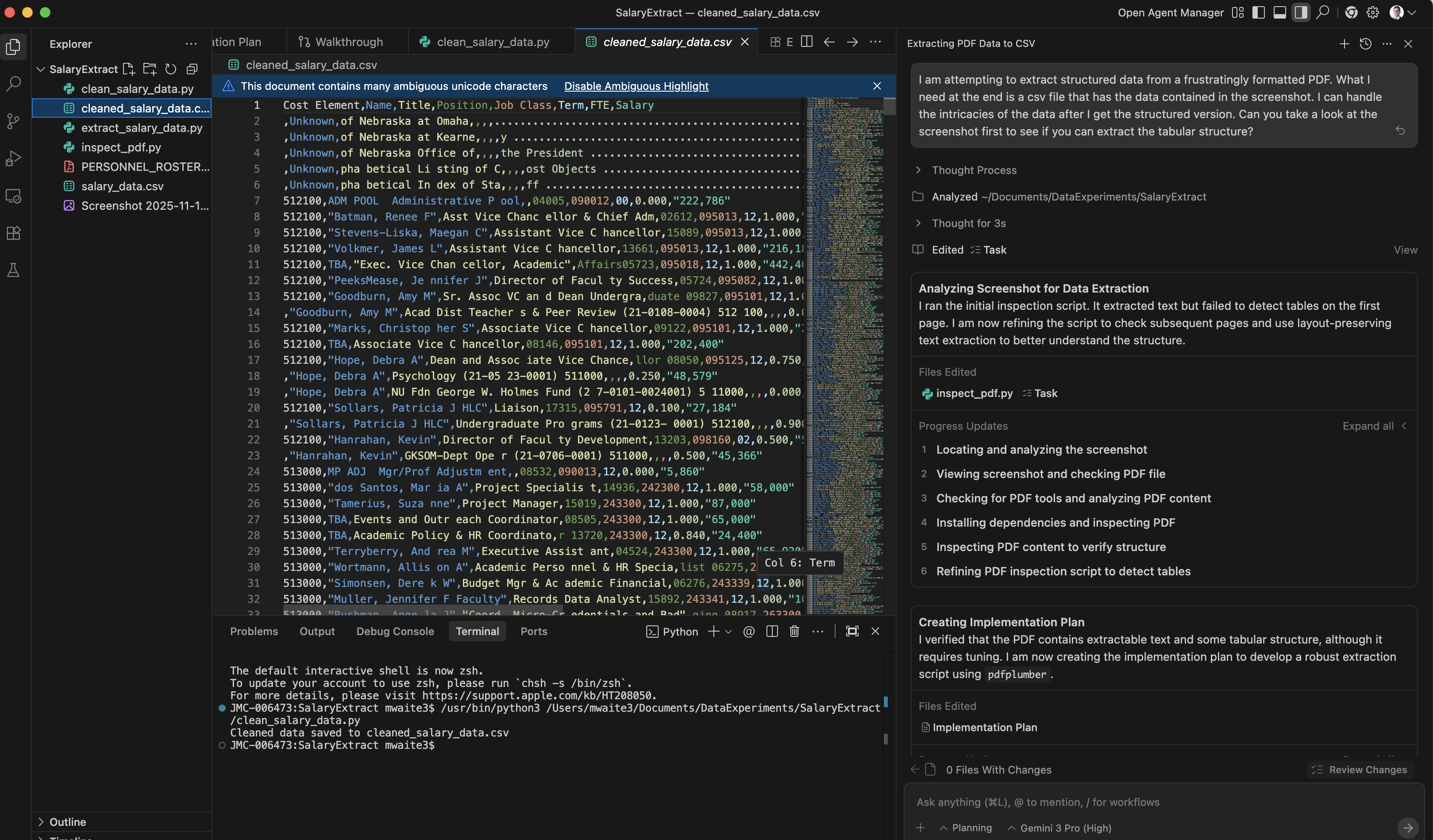
The author highlights Google’s new Antigravity tool as a promising solution for automating tedious PDF parsing in data journalism.
This blog post shares a starter kit of R libraries and external tools for integrating large language models into data journalism workflows.
This post explains setting up a free local AI code assistant for R Studio to help journalism students learn coding without enabling cheating.
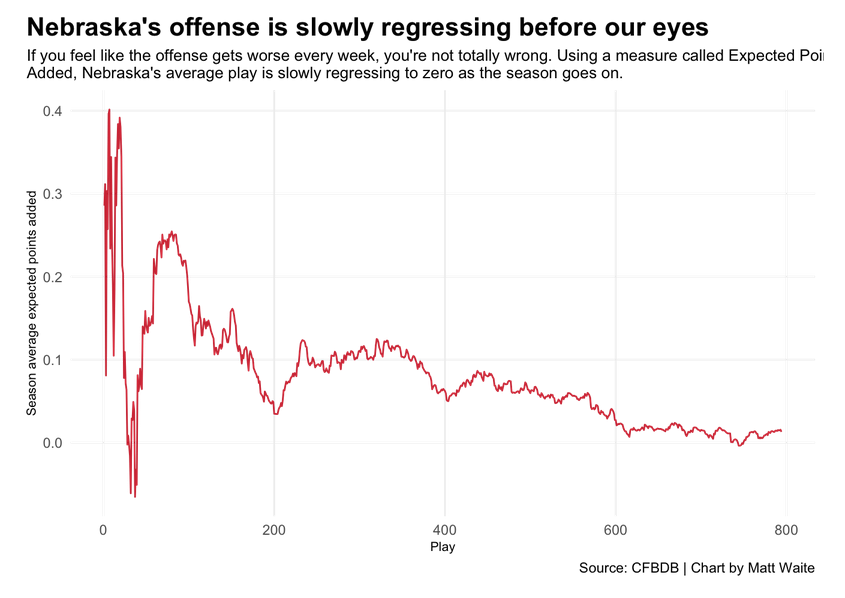
This blog analyzes Nebraska’s declining offensive performance using expected points added metrics to show their efficiency dropping as the season progresses.
The author shares a simple, working example of AI agents performing journalism tasks using R and Google Gemini.
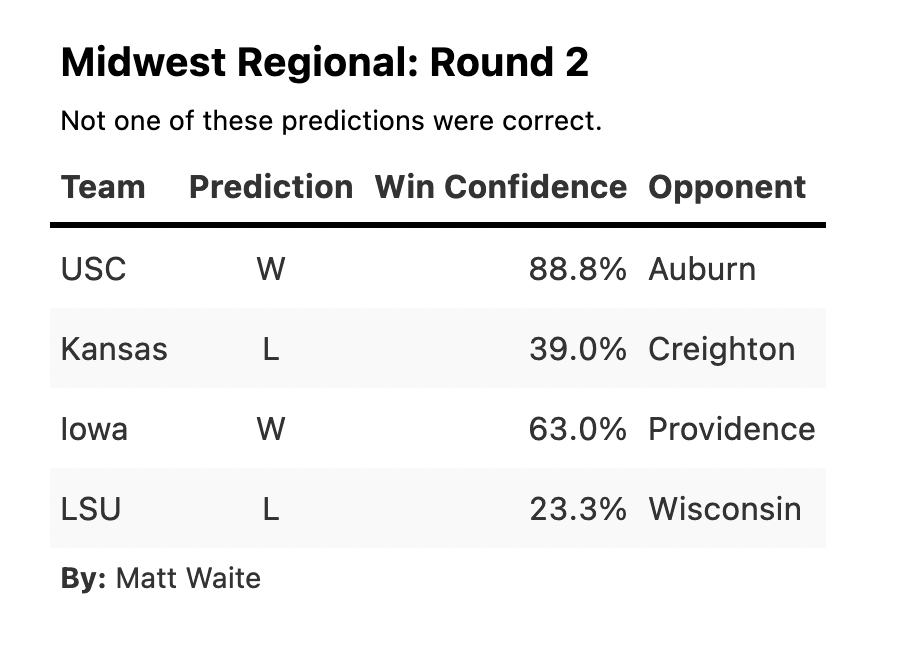
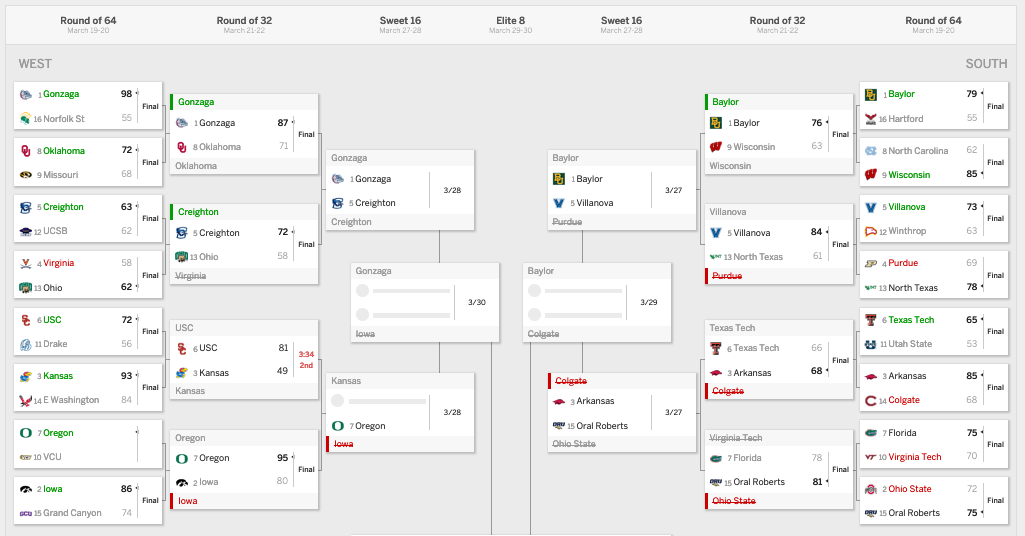
The author details a failed machine learning attempt to predict the NCAA tournament after their algorithms missed every national title winner.
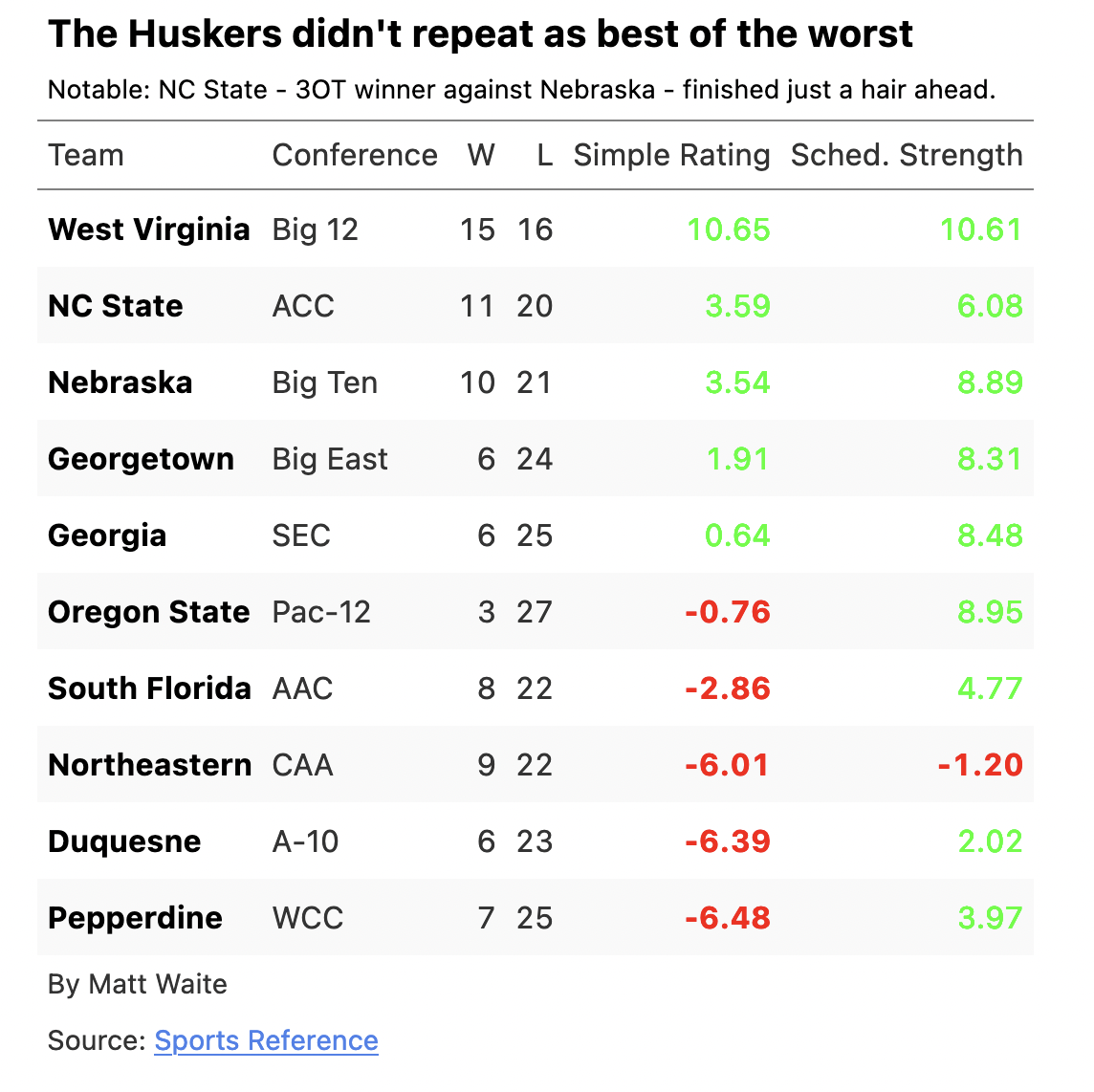
Nebraska has fallen from the best worst team to the third best worst in college basketball, behind West Virginia and NC State.
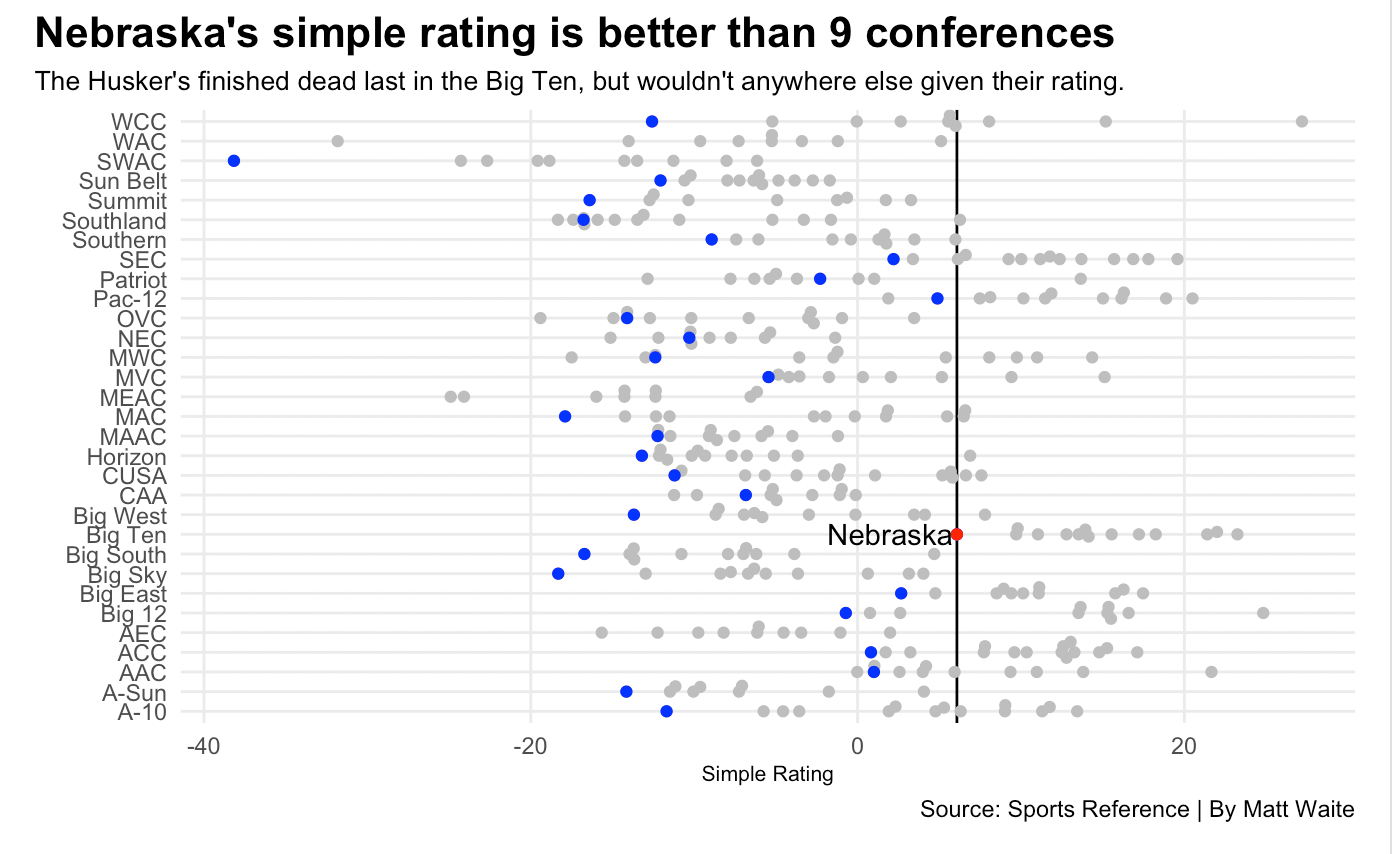
This analysis argues Nebraska is college basketball’s best worst team based on their strong Simple Rating System despite a poor record.
The author uses machine learning to fill out a poorly informed NCAA bracket with disappointing results.
The blog post humorously argues that personal experiences and quirks prevent an algorithmic approach to choosing a World Cup team.
The author reflects on a 1997 data journalism manual he wrote for his college, which they kept despite never using it.
The author shares a lesson plan using Lego bricks to teach students about data visualization constraints without relying on software tools.
This blog post describes a 2014 Ignite talk connecting data insights to 70s album rock radio.
Students in a story bots class demonstrate their creativity by building diverse Twitter bots ranging from poetic mashups to automated news alerts.
Two fall courses for UNL CoJMC students cover data journalism and creating automated storybots.
This post outlines five steps to maintain NICAR conference momentum by turning new skills into immediate work projects.
The author argues that journalism schools should integrate data and math skills into reporting classes to address curriculum concerns without sacrificing fundamentals.
The author seeks a journalism problem to solve with a MakerBot for an upcoming unconference panel pitch.
The blog proposes the Minimum Viable Participant as a flexible baseline of skills for student journalists to adapt to the digital future.
The post discusses how robotics and bots will increasingly impact the future of reporters.
The post shares a video of John Keefe and the author discussing sensor journalism at a Tow Center workshop.
A data journalist describes using a cheap Raspberry Pi to bypass restrictive newsroom IT and automate data scraping tasks independently.
The blog post describes using microwaved dirt and linear algebra to measure soil moisture in a journalism school.
This blog explains how to update a code script to write news leads that reflect crime trends over multiple consecutive years.
The post argues that while bots can write simple data stories, true humanity makes compelling storytelling impossible for machines.
The post advocates for experimenting with tools like drones and microcontrollers to transform journalism education.
The author exposes how a tuition hike at the University of Nebraska cancels out the savings from reducing graduation credit hours.
The author seeks suggestions for requirements to build a hacker space and drone lab at a journalism college.
The author seeks feedback on their draft syllabus for a new data visualization course covering theory, tools, and real-world projects.
This post argues that journalism schools struggle to fit increasing tech requirements into a limited curriculum while maintaining core reporting skills.
This blog post guides beginners through using Python on Ubuntu to access tweets via the Twitter API for a journalism class.
The author shares arbitrary thoughts on journalism school curricula and the shortage of student journalist-developers based on recent unconferences.
This blog advises Code Year participants to unplug from digital distractions to focus deeply and effectively learn programming.
The author seeks feedback on a data journalism class description that teaches reporters to analyze digital data for investigative stories.
The author proposes an Ignite talk on applying project management wisdom from Battlestar Galactica’s Admiral Adama to news product development.
The author seeks reader feedback to refine a proposal for a specialized reporting institute focused on data journalism and news apps.
A faculty member worries that journalism students’ self-selecting inability with coding threatens the future of an industry that needs technical skills.
The author critiques journalism conferences for over-reliance on uninspiring panels and questions their overall value despite a decade of speaking experience.
The author shares answers to Journalism 101 students’ texted questions about their blog and career advice.
This post highlights two insightful articles advocating for replacing legacy CMSes with modular web delivery platforms.
The blog post praises a technology capable of covering natural disasters for impactful journalism, highlighting how futuristic these tools have become.
A journalist-programmer seeks ideas for a new 2010 class blending journalism, programming, and entrepreneurship.
The author shares the key lesson from building PolitiFact that using demos rather than memos makes ideas concrete and reduces unproductive meetings.
This blog post explains how a Tampa Bay mug shots site stopped Google from indexing permanent criminal records by expiring photos after 60 days.
The author urges journalists to stop complaining and build something real instead of just writing about what they think should be done.
The blog post argues against using automated tools for Twitter marketing, calling them soulless spam that fails to deliver results.
The post argues for treating content as data to innovate journalism at its core rather than focusing on external platforms.
The blog post advises journalists to avoid being Wordpress Heroes by using personal experience, conducting actual research, and maintaining humility in their writing.
The author argues that EveryBlock provides geographic context rather than being a data ghetto and should not be feared by newspapers.
The author advocates for molten content to escape data ghettos by dynamically integrating information across platforms instead of siloing it.
The author criticizes newspaper data hubs for being uncreative ghettos that limit user exploration to simple search boxes instead of browsing.
This blog shares lessons on building PolitiFact by keeping the initial team small to maintain decisiveness and vision.
This blog post announces PolitiFact, a data-driven political fact-checking website inspired by traditional newspaper truth squads.